
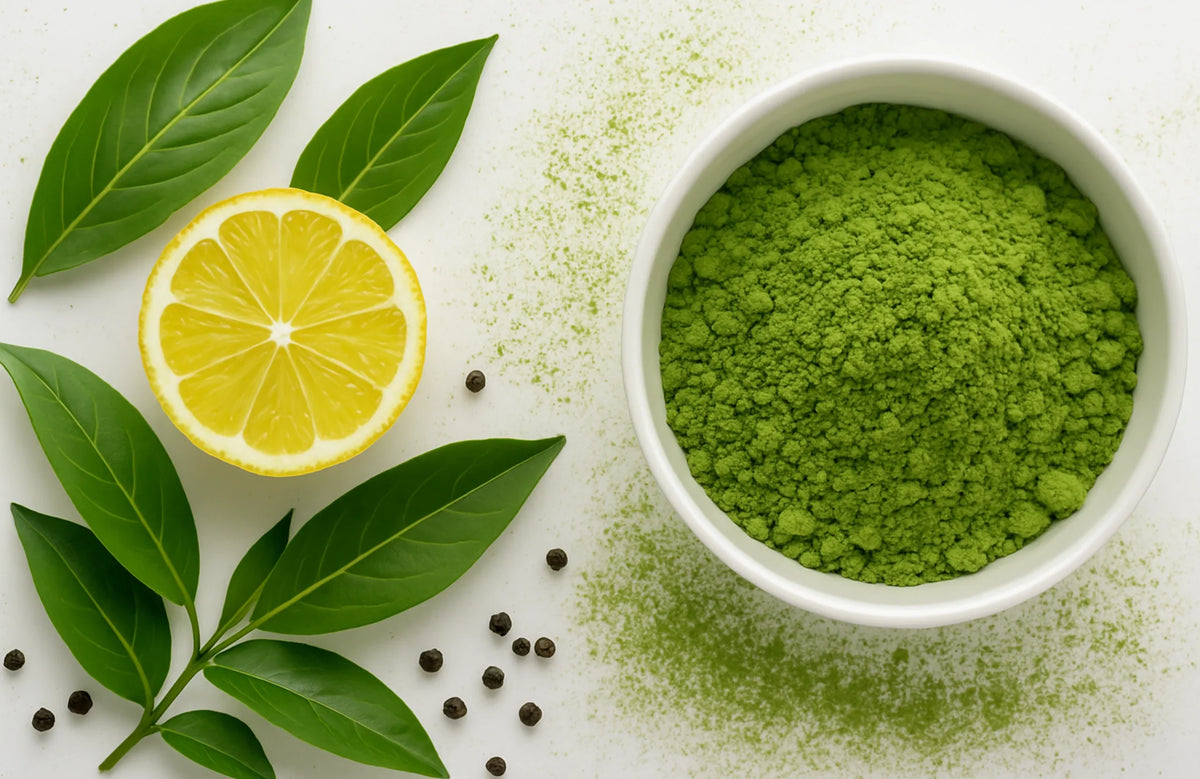
Matcha vs. Green Tea Extract: Which One Fits Your Day?
Matcha and green tea extract capsules both start with the same plant — Camellia sinensis — but they're made differently, used differently, and honestly, they're not really competing with each other. Here's how they actually compare.
What matcha is
Matcha is whole, shade-grown green tea leaves, stone-ground into a fine powder. Because you're consuming the entire leaf — whisked into water or milk, not steeped and discarded — you get the tea's natural fiber, chlorophyll, and a fuller flavor profile alongside its plant compounds. Matcha also naturally contains caffeine, released more gradually than coffee thanks to an amino acid called L-theanine, which is part of why people describe a matcha's energy as “smoother.”
Matcha is a ritual as much as a drink. It takes a moment to prepare, tastes distinctly of green tea, and works well as a coffee alternative or an afternoon reset.
What green tea extract is
A green tea extract capsule, like tigovit, is a concentrated form of green tea's catechins — primarily EGCG — isolated and standardized so you know exactly how much you're getting. There's no ritual, no taste, no preparation. You take a capsule with water and you're done.
The trade-off is precision versus experience: an extract gives you a consistent, measurable dose of EGCG without the caffeine content or preparation time that comes with matcha.
So which one is “better”?
Neither — they solve different problems.
Matcha vitality drinks make sense if you:
- Want a slower-release alternative to coffee
- Enjoy the ritual of preparing a drink
- Like the taste of green tea
- Want fiber and a broader nutrient profile alongside the plant compounds
Green tea extract capsules make sense if you:
- Want a standardized, measurable amount of EGCG
- Don't want the caffeine that comes with brewed tea or matcha
- Prefer something quick, with no preparation
- Are specifically focused on green tea's catechin content rather than the drink itself
Can you use both?
Yes — plenty of people do, just not necessarily for the same reason. Someone might drink a matcha vitality drink in the morning as their coffee replacement, and take a green tea extract capsule with a meal for a consistent, caffeine-free dose of EGCG. They're not redundant; they're addressing different parts of a routine.

The bottom line
If you're choosing based on lifestyle: matcha if you want a drink and a ritual, extract if you want precision without the preparation. If you're choosing based on what you're trying to get out of green tea specifically, an extract like tigovit gives you a number you can actually rely on.
Share:
What Is EGCG? The Science Behind Green Tea's Most Studied Compound
The Story Behind tigovit: Self-Funded, No Investors, Made in Germany